Zanzibar Hosts 10th Anniversary of East African Kiswahili Commission.
By Bishop Samuel
The Golden Tulip Conference Hall in Zanzibar was filled with dignitaries, diplomats, youth representatives, and members of the East African Community (EAC) Secretariat as the East African Kiswahili Commission (EAKC) marked its 10th Anniversary. The gathering was not only a celebration of Kiswahili’s journey but also a reflection on its future as a pillar of regional integration and cultural identity.

Hon. Hemed Suleiman Abdulla, the Second Vice President of Zanzibar, delivered a keynote that underscored the historic role of Kiswahili in uniting East Africans. He reminded participants that the Commission had, over the past decade, organized landmark events such as the First International Kiswahili Conference in 2017 and the First World Kiswahili Day in 2022, both hosted in Zanzibar. He celebrated UNESCO’s 2025 decision to adopt Kiswahili as an official working language, calling it “the first African-origin language to receive such status, opening doors for Kiswahili experts worldwide.” He emphasized Zanzibar’s commitment to nurturing Kiswahili through Vision 2050, the CCM Manifesto 2025–2030, and the Zanzibar Development Plan 2025–2026, pledging to strengthen Kiswahili curricula and promote it as a cultural tourism attraction. His message was clear: Kiswahili is not just a language, but a heritage to be safeguarded for future generations.

Dr. Caroline Asiimwe, the Executive Secretary of the Commission, spoke with pride about the Commission’s achievements and its future trajectory. She highlighted that over the past decade, EAKC had implemented programs to train teachers, translators, journalists, and language developers, while also publishing research and organizing conferences. She reminded the audience that Kiswahili is now recognized globally as a language of education, commerce, diplomacy, science, and technology. Looking ahead, she envisioned Kiswahili expanding into artificial intelligence, digital networks, and knowledge production, making it not only a cultural symbol but also a tool for innovation and sustainable development. Her call was passionate: “Let us strengthen our efforts to protect Kiswahili, invest in it, and serve it so that it may also strengthen us. If we succeed, we will have fulfilled our generational duty.”

Adding her voice to the celebrations, Rt. Hon. Rebecca Alitwala Kadaga, Uganda’s First Deputy Prime Minister and Minister for East African Community Affairs, congratulated the Commission for a decade of dedicated service. She reaffirmed Uganda’s commitment to Kiswahili, noting its integration into education and public sensitization campaigns. In her words: “This anniversary is not only a celebration of achievements but also a reaffirmation of our collective commitment to strengthening Kiswahili as a cornerstone of regional integration. Uganda stands ready to deepen collaboration with partner states, ensuring Kiswahili continues to empower our citizens and bridge nations.”
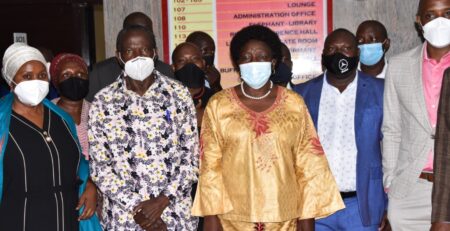
The event drew a diverse audience ,EAC Secretariat organs, diplomats, youth groups, and members of the diplomatic corps, all united by their shared commitment to Kiswahili. The atmosphere was celebratory yet purposeful, with participants reflecting on Kiswahili’s role as both a symbol of identity and a driver of integration.
As the celebrations concluded, the message was unmistakable: Kiswahili has moved from being a regional language to a global force of unity and development. The 10th Anniversary was not just a commemoration of the past, but a launchpad for the next decade, where Kiswahili will continue to shape education, technology, diplomacy, and the everyday lives of East Africans.
END