Uganda Reaffirms Commitment to EAC Common Market at Sub-Committee Meeting.
By Bishop Samuel
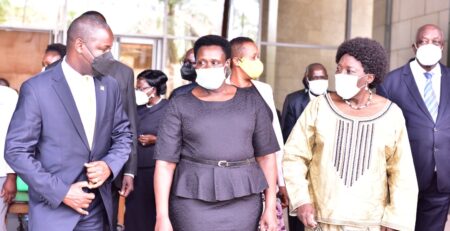
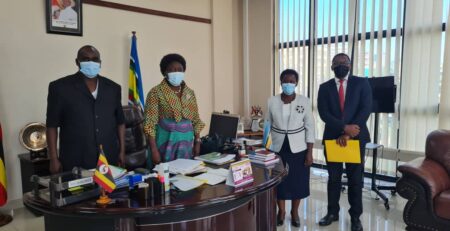
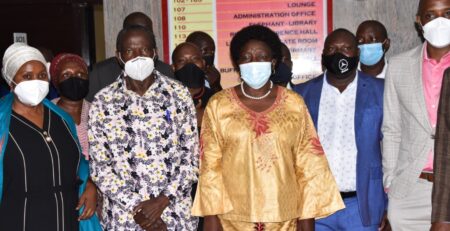
On Wednesday, 4th February 2026, the Ministry of East African Community Affairs convened a meeting of the Sub-Committees on the Common Market, focusing on the movement of goods, services, and capital. The session was held in the main boardroom at MEACA and brought together commissioners, representatives from government agencies, and technical officers from different institutions.
The Acting Permanent Secretary,
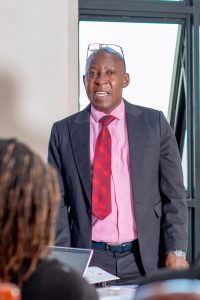
Mr. Kaima Godfrey opened the meeting with remarks that underscored Uganda’s commitment to regional integration. He reminded participants that the Common Market Protocol is central to East African cooperation and highlighted three pressing issues: gaps in implementation at the national level, the challenge of financing integration activities, and the need to fully realise the Common Market before advancing toward a single currency by 2031. He also stressed the importance of standards and mutual recognition arrangements in reducing technical trade barriers. “Regional integration is not an option, but a necessity,” he said, urging participants to treat Common Market commitments as national obligations rather than external initiatives.
In a speech read by the Assistant Commissioner for Social Affairs, Mrs. Florence Alarango, Mr. Leo Kizito Ojara, Commissioner for Economic Affairs, welcomed participants and outlined the objectives of the meeting. He explained that the sub-committees were created to give partner states a structured platform to review progress, identify barriers, share experiences and propose practical recommendations. He noted the need to update the Monitoring and Evaluation Framework, document national achievements and challenges, and review reforms of non-compliant laws. He also drew attention to the Secretariat’s request for Uganda to update the East African Monitoring System with recent implementation data and the importance of convening National Implementation Committee meetings to validate this information.
Mr. Ojara’s remarks, delivered through Mrs. Alarango, raised concerns about persistent non-tariff barriers, slow reforms of national laws, and inadequate funding of EAC activities. He urged agencies to prioritise integration obligations in their budgets, reminding participants that “regional integration cannot be sustained on goodwill alone; it requires predictable and adequate financing.”
Together, the opening and welcome remarks set a clear agenda: to confront challenges honestly, strengthen coordination, and ensure that the Common Market delivers real benefits to citizens and businesses.
As Mr. Kaima concluded, “Let us be guided by evidence, pragmatism and the shared objective of delivering a Common Market that works for businesses, investors and citizens.”

This engagement was organised by the Ministry of East African Community Affairs, Uganda, under its Department of Economic Affairs.
END