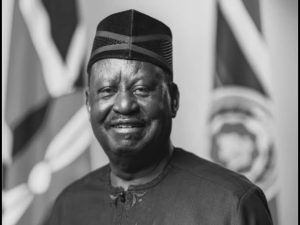
Raila Odinga: The Statesman East Africa Needed and Still Reveres
Bishop Samuel.
Raila Amollo Odinga, born in 1945 in Maseno, Kisumu County, remains one of the most influential figures in East African political history. As the son of Jaramogi Oginga Odinga, Kenya’s first Vice President and a key architect of independence, Raila inherited a legacy of activism and public service that shaped his own journey through decades of political struggle, reform, and regional leadership.
His political career gained momentum in the early 1980s when he became a vocal critic of President Daniel Arap Moi’s authoritarian regime. His alleged involvement in the 1982 coup attempt led to nearly nine years of detention, cementing his reputation as a political prisoner and freedom fighter. Raila’s resilience and defiance became a symbol of Kenya’s democratic awakening. He played a central role in the country’s transition to multiparty democracy and was instrumental in forming several political movements, including the National Development Party, the Liberal Democratic Party, and the Orange Democratic Movement. His leadership during the post-election crisis of 2007 led to a historic power-sharing agreement, making him Kenya’s second Prime Minister from 2008 to 2013.
Though Raila contested five presidential elections—2007, 2013, 2017, 2022, and 2027—he never ascended to the presidency. Yet his influence on Kenya’s democratic institutions, including the landmark 2010 Constitution, remains undeniable. His legacy, however, extends far beyond national borders. As Prime Minister, Raila championed regional integration under the East African Community, advocating for cross-border infrastructure, trade harmonization, and political cooperation. His Pan-African ideals resonated widely, earning him admiration from leaders across the region. President Yoweri Museveni of Uganda once described him as a freedom fighter and a patriotic Pan-Africanist.
Raila’s support for the Northern Corridor Integration Projects—linking Kenya, Uganda, Rwanda, and South Sudan—was instrumental in advancing transport, energy, and ICT connectivity across East Africa. His diplomatic engagements helped ease tensions and fostered a spirit of unity among EAC nations. His relationship with Uganda was particularly strong. He was a frequent visitor and collaborator on regional development initiatives, supporting joint infrastructure projects such as the Standard Gauge Railway and oil pipeline negotiations. He also advocated for educational and cultural exchanges between Kenya and Uganda, emphasizing the importance of intellectual capital in regional growth.
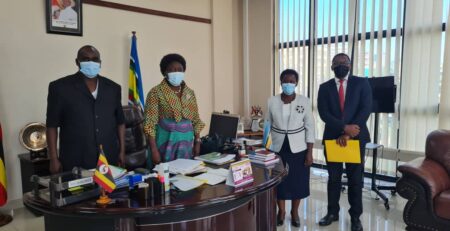
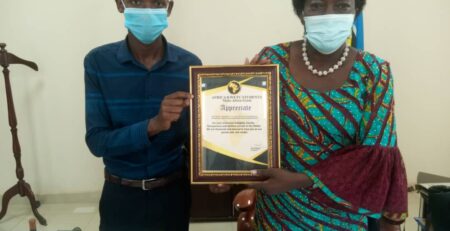
One of Raila’s most notable contributions to Uganda was his engagement with Busoga University. During his visit, he delivered a keynote address that emphasized the transformative power of higher education. His presence catalyzed collaboration between Kenyan and Ugandan academic institutions, leading to student exchange programs and joint research initiatives. Raila’s support helped elevate Busoga University’s regional profile and inspired a generation of Pan-African scholars to pursue excellence and cooperation.
In his final years, Raila transitioned from frontline politics to elder statesmanship, continuing to advocate for electoral justice, constitutional reform, and regional unity. Upon his passing in 2025, tributes poured in from across Africa. He was remembered not just as a Kenyan icon, but as a continental compass—a man whose defeats became moral victories and whose vision transcended borders. His life was a testament to resilience, conviction, and Pan-African purpose. Though he never wore the presidential crown, Raila Odinga wore the mantle of a true statesman. East Africa may miss his voice, but it continues to echo in every stride toward unity.