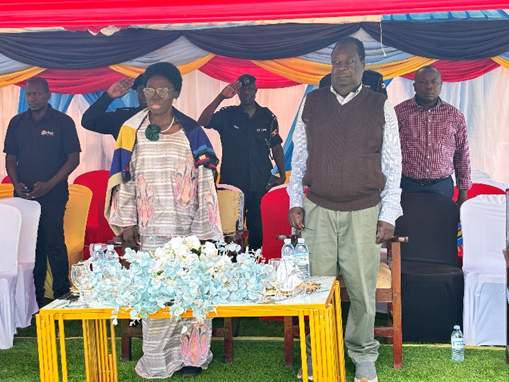
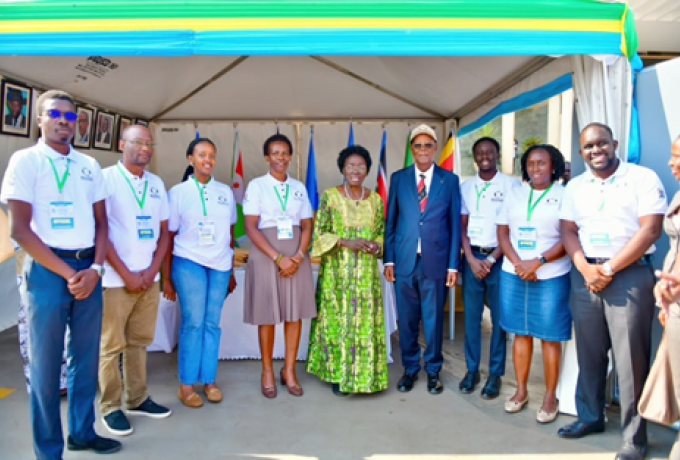
Rt. Hon. Rebecca Kadaga, First Deputy Prime Minister and Minister of East African Community Affairs(MEACA)
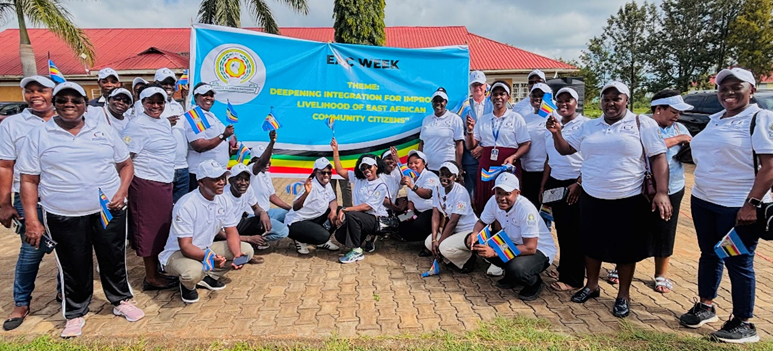
Senior government officials led by Rt. Hon. Rebecca Kadaga, First Deputy Prime Minister and Minister of East African Community Affairs(MEACA), on April 30 travelled to Sironko District to mark the annual East African Community Week, bringing a detailed account of the bloc's achievements, with calls for deeper awareness and participation in regional integration processes across East Africa.
Delivering the keynote remarks, the 1st Deputy Prime Minister and Minister for East African Community Affairs, Rt. Hon. Rebecca Kadaga, welcomed residents and reflected on her personal connection to the region, recalling her time as a student in Mbale.
She encouraged learners to embrace essay writing and active participation in knowledge-building initiatives, noting that such engagements prepare young people for emerging opportunities within the East African Community.
Rt. Hon. Kadaga outlined key achievements under EAC integration, highlighting progress in infrastructure development, including road networks such as the Kitale-Kapchorwa-Eldoret route, which provides a shorter link to Nairobi, as well as ongoing works on the Tanzania road network and the Mutukula-Kagera corridor aimed at improving regional connectivity and trade.
She further noted plans to enhance transport efficiency through the Standard Gauge Railway (SGR), particularly along the southern Kampala–Kasese route, saying such investments are intended to strengthen movement of goods and people across the region.
On economic integration, Minister Kadaga pointed to progress under the Customs Union and Common Market, including freer movement of labour and professionals. She observed that earlier restrictions on employment across borders had eased, allowing qualified professionals such as lawyers and others to work in partner states, thereby expanding opportunities for citizens.
She also acknowledged ongoing challenges, particularly Non-Tariff Barriers (NTBs), but noted that many have been resolved through regional cooperation mechanisms. However, she said some issues persist, including trade restrictions on products such as sugar and milk in certain markets, which are being addressed through negotiation among partner states.
Minister Kadaga explained that while the Common Market aims for zero tariffs, implementation remains gradual due to differing national interests, which require continuous dialogue.
She also highlighted progress towards the Monetary Union, noting different challenges in terms of currency exchange but she shared that efforts are underway to harmonize fiscal and monetary policies, with the long-term goal of a single East African currency.
Rt. Hon. Kadaga emphasized the importance of EAC institutions such as the East African Court of Justice and the East African Legislative Assembly in resolving disputes and representing citizens’ interests at the regional level.
She also pointed out low awareness of key initiatives like the Simplified Trade Regime, which allows goods valued under 2,000 US dollars to move tax-free, noting that many traders are yet to benefit due to information gaps.
In addition, she highlighted the adoption of Kiswahili and French as official EAC languages, with free language classes currently running at Nakasero Primary School in Kampala and plans to expand them to other regions.
Rt. Hon Kadaga underscored the importance of cultural integration, citing initiatives to bring together communities such as the Luo and Ateker groups, saying such engagements strengthen unity across borders. She concluded by reaffirming Uganda’s commitment to advancing the EAC integration agenda during its current chairmanship.
State Minister for East African Community Affairs, Hon. James Magode Ikuya, appreciated Rt. Hon. Kadaga for attending the celebrations and reiterated the Ministry’s commitment to expanding sensitisation outreaches across the country. He said government would intensify public education on how EAC institutions function and how citizens can directly benefit from regional integration.
He also noted that the successful model event that he termed as the Sironko model would be documented and replicated in other communities to enhance awareness and participation in EAC programmes.
The Permanent, Ms. Edith Mwanje, said this year’s EAC Week was deliberately marked with a week-long community sensitisation programme to deepen public understanding of integration. She reaffirmed the Ministry’s coordinating role and Uganda’s leadership as current Chair of the EAC Summit, stressing continued focus on the Customs Union, Common Market, Monetary Union, and Political Federation pillars.
Resident District Commissioner Mr. Sam Balwanyirila expressed appreciation for government efforts in advancing the EAC agenda, reaffirming local support for regional integration.
The Chief Administrative Officer, Mr. Mulondo Robert, noted that EAC protocols have already improved trade and movement across borders and expressed optimism for even greater benefits ahead.
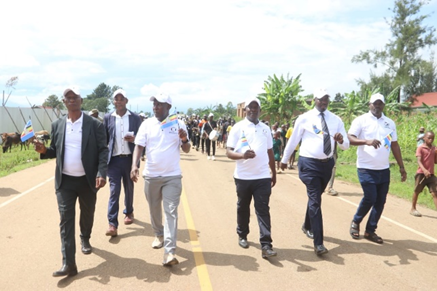
LC5 Chairperson Mr. Giruli David Livingstone emphasized the importance of public awareness, noting that many citizens still lack information about the EAC. He called for sustained sensitisation efforts, saying East Africans must remain united to thrive collectively. The EAC Week celebrations form part of a wider regional effort to promote awareness of integration achievements and encourage citizens to actively participate in the opportunities created under the East African Community framework.
Related stories
We are professional and reliable provider since we offer customers the most powerful and beautiful themes. Besides, we always catch the latest technology and adapt to follow world’s new trends to deliver the best themes to the market.
Contact info
We are the leaders in the building industries and factories. We're word wide. We never give up on the challenges.
- 2 Queen Street,California, USA
- (+84) 04 123 456
- [email protected]