EAC Parliamentary Week Reinforces Call for Citizen-Centred Integration and Stronger Regional Action
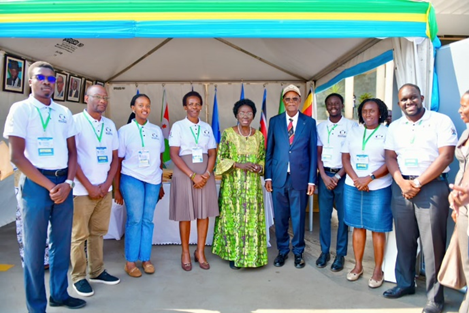
The Ministry of East African Community Affairs (MEACA) actively participated in the East African Community (EAC) Parliamentary Week held from 8 to 10 July 2026 at the Parliament of Uganda, using the platform to engage stakeholders, showcase the achievements of regional integration, and raise public awareness about the opportunities available to Ugandans under the East African Community.
Throughout the three-day event, MEACA maintained an interactive exhibition where Members of Parliament, government officials, students, members of the public, and development partners engaged with the Ministry's technical team on the EAC integration agenda, the Community's milestones, and the benefits arising from the Customs Union, Common Market, Monetary Union, and the journey towards Political Federation.
The opening day marked the official commencement of Parliamentary Week, setting the stage for dialogue on the future of regional integration. MEACA's exhibition attracted visitors eager to learn how East African integration continues to create opportunities for trade, investment, employment, education, and the free movement of people, goods, services, and capital across the region.
Discussions on the second day focused on translating regional commitments into tangible results for citizens. Leader of the Opposition, Hon. Joel Ssenyonyi, reminded participants that the aspiration of the East African Community is founded on the principle that "our unity is our pillar." While acknowledging the progress made since the revival of the Community in 2000, he challenged Partner States to move beyond signing agreements and instead ensure that regional commitments are fully implemented through domestic legislation and strong institutions. He emphasized that integration should be measured by how easily citizens and businesses move across borders and how efficiently goods are traded.
Hon. David Bahati, Minister of State for Trade, Industry and Cooperatives, highlighted the region's enormous economic potential and called for accelerated industrialisation through value addition, strategic investments, and the removal of trade barriers. He stressed that strengthening regional infrastructure, expanding Special Economic Zones, and investing in projects such as the Standard Gauge Railway and regional energy generation would unlock greater competitiveness and position East Africa as a stronger trading bloc.
Adding a private sector perspective, the Chairperson of the Presidential Advisory Committee on Exports and Industrial Development (PACEID), Mr. Odrek Rwabwogo, observed that regional integration will only succeed if East Africa builds the systems that support trade. He called for improved standards, stronger logistics, affordable export finance, competitive regional value chains, and sustained political commitment to eliminate barriers that continue to constrain businesses.
The final day shifted attention towards citizen-centred integration. Hon. Prof. Ephraim Kamuntu proposed the introduction of an East African Community Marathon as a practical initiative to encourage greater public participation in the integration process, noting that many citizens still perceive integration as a government-driven agenda rather than one that directly belongs to them.
Rt. Hon. Rebecca Alitwala Kadaga, First Deputy Prime Minister and Minister for East African Community Affairs, called for accelerated implementation of key regional commitments, including the phased introduction of a common currency under the East African Monetary Union and continued progress towards Political Confederation through the principle of variable geometry. She also highlighted recent decisions by the EAC Summit aimed at strengthening compliance with Treaty obligations, reforming regional decision-making processes, revising the Community's contribution formula, and intensifying efforts to eliminate non-tariff barriers that continue to hinder trade and the free movement of people across the region.
Throughout the week, one message remained consistent, the future of East African integration depends not only on the agreements already signed, but on effective implementation, stronger institutions, and greater citizen participation. MEACA's continued engagement with stakeholders during Parliamentary Week reaffirmed the Ministry's commitment to bringing regional integration closer to the people and ensuring that Ugandans fully understand and benefit from the opportunities offered by the East African Community.


Related stories
We are professional and reliable provider since we offer customers the most powerful and beautiful themes. Besides, we always catch the latest technology and adapt to follow world’s new trends to deliver the best themes to the market.
Contact info
We are the leaders in the building industries and factories. We're word wide. We never give up on the challenges.
- 2 Queen Street,California, USA
- (+84) 04 123 456
- [email protected]