Ministry of East African Community Affairs Charts FY 2026/27 Roadmap
By Bishop Samuel
In Gayaza, Uganda, the Ministry of East African Community Affairs convened its Budget Planning Retreat for the Financial Year 2026/27, a pivotal moment in the Ministry’s strategic calendar. Organized through its Planning Unit, the retreat was held in accordance with Uganda’s national planning and budgeting frameworks under the Fourth National Development Plan (NDP IV), and guided by the Public Finance Management Act (2015). These retreats foster strategic alignment, performance accountability, and resource prioritization across government ministries.

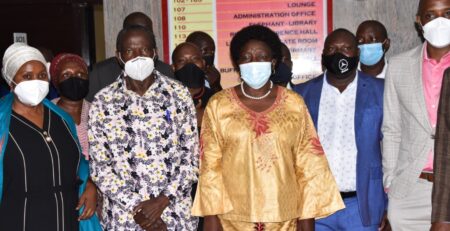
Presided over by Permanent Secretary Edith N. Mwanje, the retreat brought together heads of departments and senior staff to reflect on performance, recalibrate priorities, and prepare the Budget Framework Paper (BFP) ahead of the 15th November 2025 deadline. “I commend the team for their achievements during the current financial year and urge you to maintain momentum as we enter the second year of implementing NDP IV and our Strategic Plan,” Mwanje noted in her opening remarks.
The preliminary budget estimates for FY 2026/27 stood at UGX 41.6 billion, with UGX 1.57 billion allocated to wages, UGX 40.03 billion to non-wage recurrent, and UGX 92.9 million to development expenditure. Notably, the Agro-Industrialization Program registered an increment of UGX 210 million, reflecting the Ministry’s commitment to advancing regional economic integration. Beyond figures, the retreat served as a platform for performance review, identifying gaps such as recurring audit queries, poor budgeting for Non-Tax Revenue, partial implementation of activities, and limited visibility of MEACA’s mandate in local governments. “Let us improve quarterly performance reporting, adhere to prescribed formats, and ensure timely submissions; this is key to accountability and institutional learning,” Mwanje emphasized.
This retreat enabled the Ministry to align its strategic priorities with planned activities, ensuring that every budget line contributes meaningfully to the East African Community integration agenda. It promoted efficient allocation of limited resources, strengthened accountability mechanisms, and reinforced the Ministry’s visibility, especially at the grassroots level. The gathering cultivated team cohesion, fostering a shared understanding of goals and a renewed commitment to professionalism, integrity, inclusivity, and innovation.

As the retreat concluded, participants left with a clearer roadmap, sharper focus, and a collective resolve to deliver value for money while upholding the Ministry’s mandate. The Planning Unit was tasked with guiding departments through the budgeting process, ensuring that all work plans reflect national objectives and government policy commitments. Through this retreat, MEACA reaffirmed its role as a steward of regional integration and a model of strategic public sector planning.
END